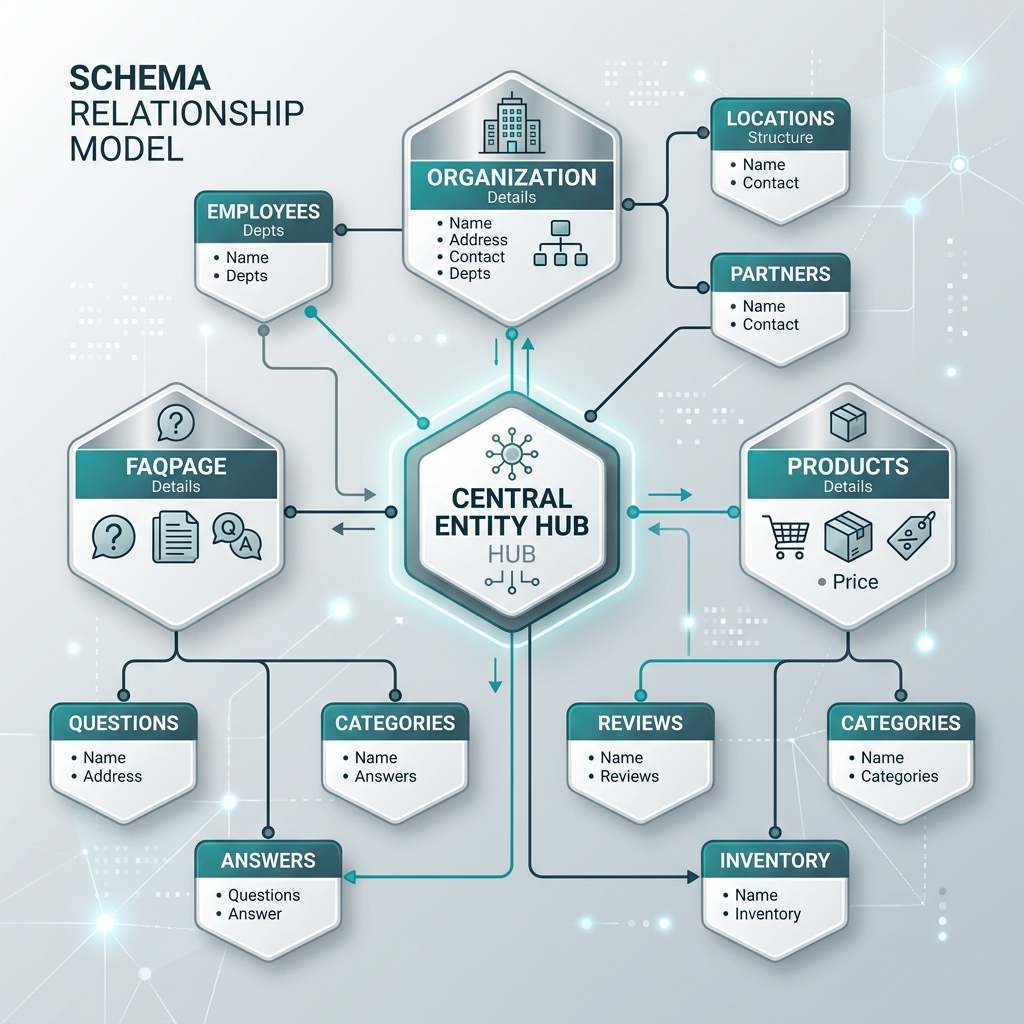
Structured data is the most direct communication channel between your website and search assistant crawlers. By providing facts in a pre formatted JSON-LD structure, you eliminate the extraction guesswork that conversational systems face when parsing standard HTML.
Why JSON-LD is the Standard
Unlike inline microdata, JSON-LD is injected into a single script tag inside your page header. This keeps your presentation code separate from your semantic data, making it easier to maintain and update. Crawler engines prefer this format because they can parse the entire data structure in a single pass without analyzing layout elements.
The High Impact Schemas to Implement
To maximize your visibility score, focus on implementing these three essential schemas:
- Organization Schema: Tells the crawler your official company name, logo, contact points, and social profiles. Use the
sameAsproperty to link to authoritative external references. - FAQPage Schema: Maps common user questions directly to concise answers. Conversational systems frequently pull these structured pairs to synthesize direct answers.
- Product Schema: For ecommerce and software pages, provide clear product names, price ranges, availability status, and review scores. This ensures the assistant retrieves accurate details.
Validation and Maintenance
When writing JSON-LD, ensure that every property matches the visible text on your page. Discrepancies between hidden schema and visible content can cause search assistants to mark your page as low trust, negatively affecting your visibility index. Always validate your markup using structured data test tools after deployment.